


Singapore extends rental occupancy cap to 8 persons until 2028 for larger HDB flats and private homes. Analysis of supply pressures, tenant relief, and whether temporary fixes address structural housing challenges.
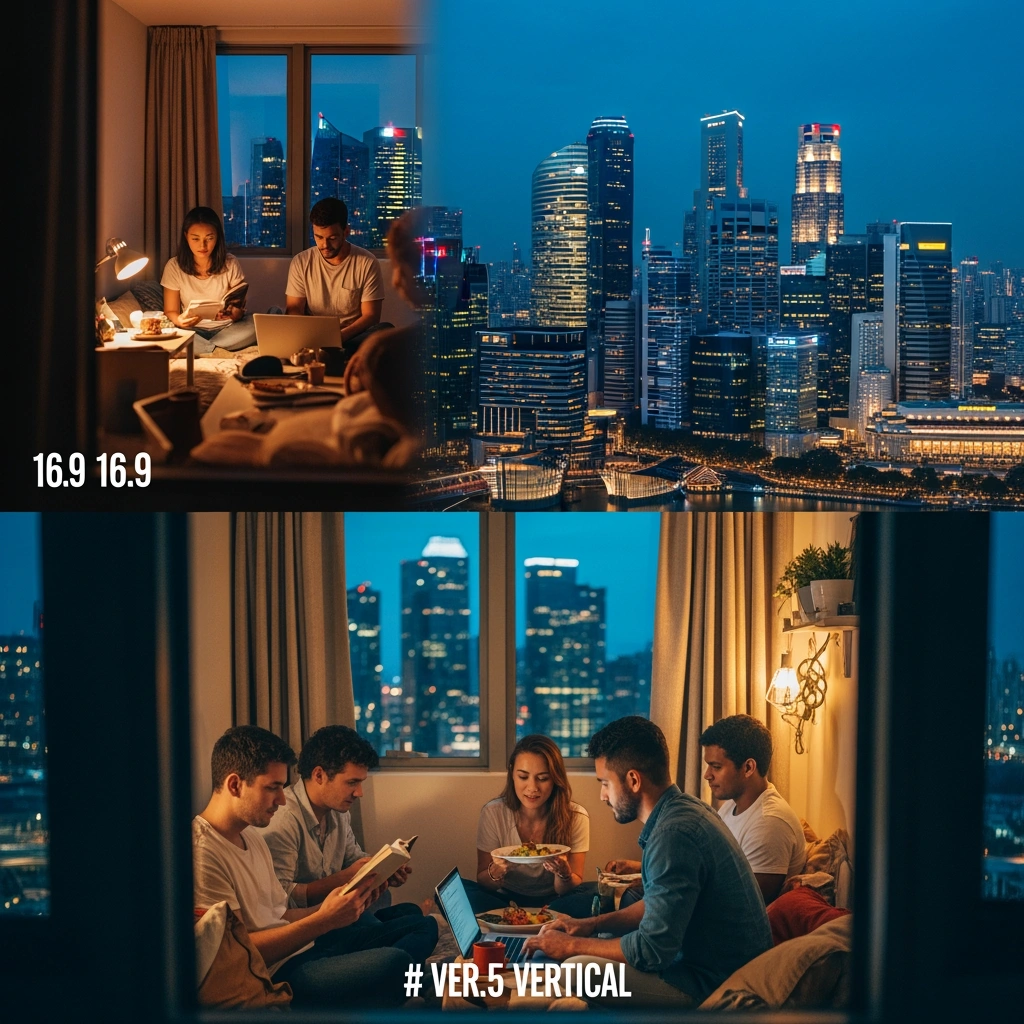
On a humid Tuesday evening in Geylang, eight software engineers from India, the Philippines, and Malaysia gather around a modest dining table in their shared four-room HDB flat. The arrangement works—barely. Two to a bedroom, a converted study, and a carefully negotiated bathroom schedule have become their reality in one of the world’s most expensive rental markets. For them, Singapore’s announcement in January 2026 that the temporary relaxation of rental occupancy limits would extend until the end of 2028 arrived not as policy abstraction but as tangible relief: two more years of legal security in a city where housing remains the defining economic anxiety.
The extension, jointly announced by the Housing and Development Board (HDB) and Urban Redevelopment Authority (URA), maintains the current cap of eight unrelated persons for four-room and larger HDB flats and private residential properties of 90 square metres or more—up from the standard six. Originally implemented as a pandemic-era stopgap and set to expire at the close of 2026, the measure now extends through December 2028, a recognition that Singapore’s rental pressures remain far from resolved despite government assurances of an expanding housing pipeline.
But this is more than a bureaucratic reprieve. It represents a pragmatic accommodation to economic realities that Singapore’s policymakers would prefer not to acknowledge too loudly: that the city-state’s housing supply, for all its vaunted efficiency and central planning, cannot yet meet the demand generated by its own economic success. The decision carries consequences that ripple through neighbourhoods, balance sheets, and the daily calculations of hundreds of thousands of residents navigating one of Asia’s tightest housing markets.
For the eight engineers in Geylang, the extension means stability. For their Singaporean neighbours, it may mean continued anxieties about overcrowding and strain on common facilities. For property investors, it signals sustained rental yields. And for housing economists, it raises uncomfortable questions about whether temporary adjustments have become permanent features of a system under structural stress.
The Policy That Wouldn’t Go Away
Singapore’s rental occupancy cap has long embodied the government’s paternalistic approach to urban planning—well-intentioned social engineering that occasionally collides with market forces. The original limit of six unrelated persons per unit, established decades ago, aimed to prevent overcrowding, maintain neighbourhood amenity, and preserve the “heartland” character of HDB estates, where the majority of Singaporeans live.
Then came COVID-19, and with it, a cascade of disruptions. Border closures, construction delays, and supply chain bottlenecks stalled Singapore’s housing delivery machine precisely when demand began surging. By 2023, rental rates had soared to record highs—HDB rents climbing more than 30 percent year-on-year in some segments, with private condominiums not far behind. Foreign professionals returning post-pandemic, students flooding back to universities, and migrant workers supporting Singapore’s economic recovery all competed for limited stock.
In response, the government implemented the temporary relaxation in 2024, raising the cap to eight persons for larger units. The measure was explicitly framed as transitional, a bridge until new completions could absorb demand. Authorities pledged to monitor the situation closely, with the understanding that normal caps would resume once supply stabilised.
Two years later, that moment has not arrived.
Why the Extension Was Inevitable
The January 2026 extension announcement came wrapped in familiar reassurances. Officials pointed to a “robust pipeline” of public and private housing completions scheduled through 2028, with approximately 100,000 BTO (Build-To-Order) flats and tens of thousands of private units in various stages of construction. Yet beneath the optimistic projections lies a more complex reality: supply is increasing, but so is demand, and the gap between them remains stubbornly persistent.
Data from the URA shows private residential rents, while moderating from their 2023 peaks, remain elevated by historical standards—roughly 15-20 percent above pre-pandemic levels. HDB rental volumes continue to run high, with transactions in December 2025 still 8 percent above the five-year average. The rental vacancy rate for private properties hovers around 5 percent, down from the 8-10 percent typical of more balanced markets.
Several factors explain this sustained pressure. Singapore’s GDP growth, projected at 2.5-3 percent for 2026, continues to draw foreign talent and investment. The financial services sector alone has added an estimated 15,000 jobs since 2024, many filled by expatriates requiring housing. Universities report record international enrollments. Meanwhile, demographic shifts—young Singaporeans delaying marriage, ageing parents requiring separate accommodation, and rising divorce rates—have increased domestic demand for smaller, flexible rental options.
The government’s own success in controlling private residential supply, long a deliberate policy to prevent market oversupply, now constrains flexibility. Unlike markets where developers can rapidly respond to price signals, Singapore’s centrally managed land sales and approval processes create inevitable lags between demand spikes and supply responses. Even with accelerated construction timelines, the physics of building remain unchanged: a major residential development requires four to five years from land sale to completion.
The Human Equation: Winners, Losers, and Those in Between
Policy pronouncements rarely capture the lived texture of housing markets. But the occupancy cap extension creates clear winners and losers, with predictable patterns visible across Singapore’s social geography.
The beneficiaries are obvious. Migrant professionals in tech, finance, and engineering—often on employment passes with family members abroad—can continue sharing costs in an otherwise prohibitive market. A four-room HDB flat in a central location might rent for S$3,800-4,200 monthly; split eight ways, that becomes S$475-525 per person, manageable on middle-tier salaries. Remove this option, and many would face either relocating to cheaper, distant estates or leaving Singapore entirely—hardly outcomes that serve the city-state’s economic interests.
International students represent another beneficiary cohort. With university accommodation limited and purpose-built student housing expensive, shared HDB rentals offer crucial affordability. A master’s student from Vietnam or Indonesia might budget S$500-600 monthly for housing; the extended cap makes this feasible in proximity to campus and public transport.
Landlords, naturally, benefit from sustained rental demand and the flexibility to maximise unit yields. For HDB owners who have upgraded to private property but retained their original flats as investments, the higher occupancy cap can mean the difference between marginal returns and attractive passive income. A four-room flat generating S$4,000 monthly with eight tenants yields roughly 3-4 percent annually on current valuations—modest but meaningful in a low-interest environment.
The costs are harder to quantify but no less real. Long-term HDB residents in estates with high concentrations of rental units frequently report quality-of-life concerns: overcrowded lifts, strained rubbish disposal facilities, noise complaints, and the erosion of community cohesion that occurs when transient populations replace stable owner-occupier families. These grievances appear regularly on community forums and at town hall meetings, though authorities insist enforcement against genuine dis-amenities remains robust.
There are equity dimensions too. Young Singaporean couples, already navigating extended BTO waiting times (averaging 4-5 years), watch rental units absorb stock that might otherwise ease market pressure. While government policy restricts HDB rental eligibility to owners who have met minimum occupation periods, the perception persists that policy accommodates foreign transients over citizen needs.
The extended cap may also postpone necessary conversations about structural reform. By treating rental pressure as temporary rather than endemic, policymakers avoid confronting harder questions: whether Singapore’s population growth targets align with housing supply realities, whether current urban density limits remain appropriate, or whether the HDB homeownership model itself requires evolution for a more mobile, global workforce.
Overcrowding Risks and Enforcement Realities
The occupancy cap exists primarily to prevent overcrowding and maintain living standards. Eight unrelated persons in a four-room HDB flat (typically 90-110 square metres) translates to roughly 11-14 square metres per occupant—tight but not unconscionable by urban Asian standards. Hong Kong’s subdivided flats often provide far less; even New York’s sharehouse arrangements can be comparably dense.
Still, density creates friction. More occupants mean more cooking, more laundry, more bathroom contention, more visitors, more noise. In estates where multiple units house maximum-capacity rentals, residents report infrastructure strain. Lift queues lengthen during peak hours. Void deck gatherings grow larger and louder. Bin centres overflow between collection cycles.
Authorities emphasise that approval for higher occupancy can be revoked if dis-amenities arise, and enforcement teams conduct periodic inspections. In practice, however, enforcement remains reactive and resource-constrained. Town councils and HDB officers respond to complaints but lack capacity for systematic monitoring. The result is uneven outcomes: some estates manage higher density with minimal issues; others experience persistent tensions.
There are also concerns about informal overcrowding beyond legal limits. If eight persons are permitted, anecdotal evidence suggests some units house nine or ten, with tenants cycling through or sleeping in shifts—arrangements difficult to detect and prove. While outright illegal, such practices reflect market desperation that stricter caps might paradoxically worsen.
Global Comparisons: How Other Cities Handle Rental Density
Singapore’s occupancy challenges are hardly unique. Dense, expensive global cities from London to Tokyo to Vancouver wrestle with similar tensions between housing affordability, quality of life, and regulatory oversight.
London employs a “room standard” based on age, gender, and relationships, generally limiting two adults per bedroom for non-family members. However, enforcement is weak, and unlicensed Houses in Multiple Occupation (HMOs) proliferate, particularly in boroughs like Newham and Brent. The result is often worse overcrowding than Singapore’s regulated approach allows.
New York City has no citywide occupancy cap but relies on the “two-person-per-bedroom plus one” rule for fire safety and zoning compliance. Enforcement varies wildly by neighbourhood, and illegal subdivisions remain common in immigrant communities in Queens and Brooklyn.
Hong Kong, facing perhaps the most severe housing crisis in the developed world, has minimal effective occupancy regulation for private rentals. Subdivided units often house families in spaces smaller than a Singapore HDB room, with virtually no privacy or amenity. By comparison, Singapore’s approach appears almost luxurious.
Tokyo manages density through stringent building codes and market supply rather than occupancy caps. Japan’s relatively flexible zoning and abundant housing construction keep rents moderate, reducing pressure for extreme sharing arrangements. The lesson: adequate supply remains the most effective regulation.
What distinguishes Singapore is the explicitness and centrality of occupancy policy within a broader state-managed housing system. Most other cities rely more heavily on market mechanisms and passive regulation. Singapore’s approach offers greater control and, arguably, higher minimum standards—but also creates rigidity when market conditions shift rapidly.
The Supply Pipeline: Enough, or Just Sufficient?
Government projections suggest relief is coming. HDB expects to complete approximately 23,000 flats in 2026, rising to 29,000 in 2027 and 32,000 in 2028—the highest completion rates in over a decade. Private developers have launched numerous projects, with completions forecast around 15,000-18,000 units annually through 2028.
On paper, this supply surge should ease rental pressures and justify allowing the occupancy cap to revert to normal by 2029. Yet several factors complicate this optimistic scenario.
First, not all new supply enters the rental market. Most BTO flats go to owner-occupiers subject to minimum occupation periods. Private condominiums see variable investor-occupier splits, but many purchasers buy for own use, especially in the current high-interest environment where rental yields barely cover mortgage costs.
Second, demand continues to grow. Singapore’s population increased by approximately 150,000 between 2023 and 2025, largely driven by employment pass holders and their dependents. Government economic strategies—promoting financial services, tech startups, family offices, and advanced manufacturing—all require importing talent, which requires housing them. Unless economic policy shifts dramatically, this demand component will persist.
Third, mismatches between supply and demand persist. New developments concentrate in suburban areas like Tengah and Punggol, while rental demand clusters in central regions near employment nodes and transit. A family might eventually buy a BTO in Tengah, but they’ll rent in Queenstown or Bishan for years until construction completes—and the rental market must absorb this lag.
Finally, there’s the replacement effect. Older HDB estates undergo SERS (Selective En bloc Redevelopment Scheme) and cyclic upgrading, temporarily removing rental stock. The net increase in available units may be smaller than gross completions suggest.
Analysts at real estate consultancies project that while rental growth will likely moderate through 2027-2028, rents will stabilise at elevated levels rather than correct sharply. If accurate, this supports the government’s decision to extend the relaxation rather than risk market disruption.
What Happens After 2028?
The announcement includes the standard caveat: authorities will “monitor and review” whether further extension beyond 2028 proves necessary. This hedging language reflects policymakers’ discomfort with indefinite arrangements that undermine the principle of occupancy limits. Yet the logic that justified the 2026 extension could easily apply in 2028.
Three scenarios seem plausible:
Scenario One: Successful Normalisation. Robust supply completions and moderating demand (perhaps due to economic slowdown or policy shifts) create sufficient slack. Rental markets cool appreciably. By late 2028, authorities announce the cap will revert to six persons from January 2029, with transitional grace periods. This represents the government’s stated objective.
Scenario Two: Indefinite Extension. Rental pressures persist due to sustained economic growth and immigration. Reverting to six persons would create market disruption and political backlash. The cap extension becomes semi-permanent, reviewed periodically but continuously renewed. This would represent an implicit admission that Singapore’s housing model requires permanent adjustment to accommodate new economic realities.
Scenario Three: Structural Reform. The government uses the breathing room provided by the extension to implement deeper changes: zoning reforms to allow greater density in central areas, relaxation of HDB ownership restrictions to increase rental supply, or incentives for purpose-built co-living developments. By 2028, these structural shifts reduce reliance on occupancy cap manipulation.
Scenario Two appears most probable, though policymakers would resist this characterisation. Temporary measures have a way of becoming permanent when the underlying conditions persist—a pattern familiar from economic subsidies, immigration quotas, and tax breaks worldwide.
More fundamentally, the extension debate highlights tensions within Singapore’s housing model. The system brilliantly solved the challenge of homeownership for the majority but was designed for a different era: families with children, stable employment patterns, and clear lifecycle stages. Today’s economy demands greater labour mobility, flexibility, and accommodation of diverse household structures. The rental market—once peripheral—has become central to housing supply. Policy is adapting incrementally, but the philosophical framework remains rooted in owner-occupation norms.
Beyond Caps: Rethinking Singapore’s Rental Paradigm
If rental housing has evolved from exception to essential component of Singapore’s housing ecosystem, perhaps policy should evolve accordingly. Rather than treating rental occupancy as an aberration requiring caps and monitoring, might authorities embrace it as a legitimate, permanent feature deserving of thoughtful design?
Some possibilities:
Purpose-built rental housing at scale could reduce pressure on the HDB resale rental market. Singapore has experimented with this through initiatives like Community Care Apartments, but volumes remain tiny relative to demand. Expanding public rental housing for middle-income workers—beyond the current focus on low-income citizens—could alleviate overcrowding concerns while maintaining quality standards.
Co-living developments with professional management, shared facilities, and higher density by design offer an alternative to ad hoc flat-sharing. Private developers have launched several such projects, but planning regulations and site availability constrain supply. Explicit zoning for co-living could channel density into appropriate locations with supporting infrastructure.
Differential occupancy standards based on unit size and location might offer flexibility. An 110-square-metre flat in a mature estate with robust infrastructure might reasonably accommodate eight persons, while a cramped 90-square-metre unit in an ageing block should not. Nuanced regulation could better balance competing interests.
Incentivising owner-occupancy in HDB estates with high rental concentrations might preserve community stability. Conversely, designating certain estates as rental-friendly could cluster transient populations with appropriate facilities and expectations.
None of these approaches offers a silver bullet, and each involves trade-offs. But collectively, they suggest that Singapore’s housing policy apparatus—formidable in its execution but conservative in its frameworks—might benefit from reimagining rental housing as opportunity rather than problem.
Conclusion: Pragmatism Over Ideology
The extension of Singapore’s rental occupancy cap to 2028 is, above all, pragmatic. It acknowledges reality: that rental demand remains strong, that supply increases take time, and that disrupting current arrangements would create hardship without commensurate benefit. This pragmatism deserves recognition in a policy environment sometimes criticised for rigidity.
Yet pragmatism can also defer necessary reckonings. By treating elevated rental pressure as temporary for the better part of a decade, Singapore risks missing opportunities for structural adaptation. The question is not whether eight persons should share a four-room flat indefinitely—clearly not an ideal outcome—but whether current policy settings align with the city-state’s economic trajectory and demographic realities.
For the eight engineers in Geylang, the extension provides two more years of legal certainty in a precarious market. For their neighbours, it means ongoing adjustments to increased density. For policymakers, it purchases time to deliver promised supply increases while postponing harder choices about housing’s future.
The cap was always supposed to be temporary. That it has required extension suggests the challenge may be more permanent than anyone wishes to acknowledge. Whether Singapore’s housing system can evolve to meet this challenge—or whether it will continue managing through serial temporary measures—remains the defining housing policy question of the coming decade.
In the interim, those eight engineers will continue their careful bathroom schedules, their negotiated kitchen rotations, their shared pursuit of opportunity in one of Asia’s most dynamic but demanding cities. They represent not policy failure but policy adaptation, the human face of a housing market still searching for equilibrium between aspiration and accommodation.
Discover more from The Business Times
Subscribe to get the latest posts sent to your email.


